Okta
Interning at Okta was a life-changing experience.
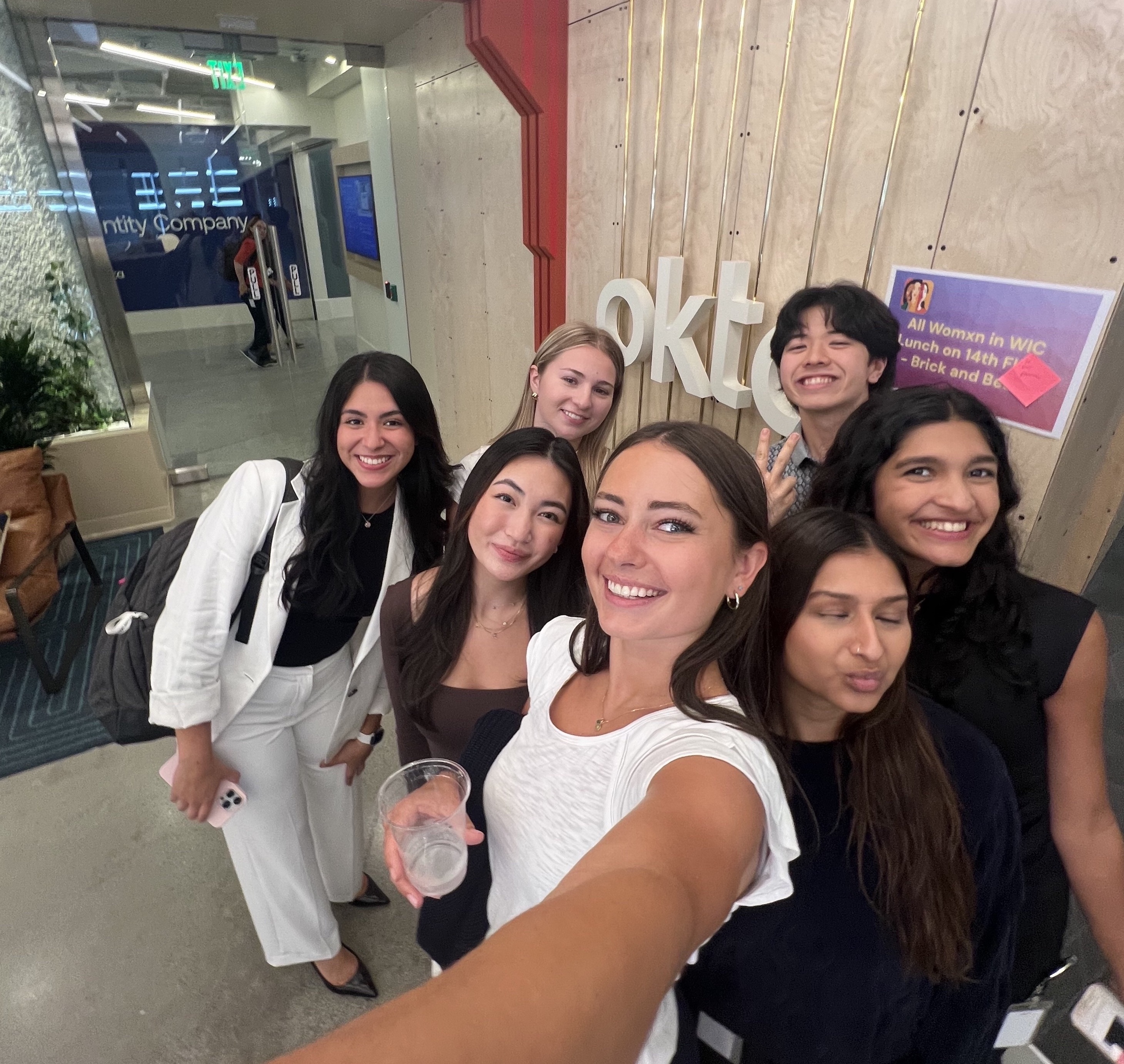
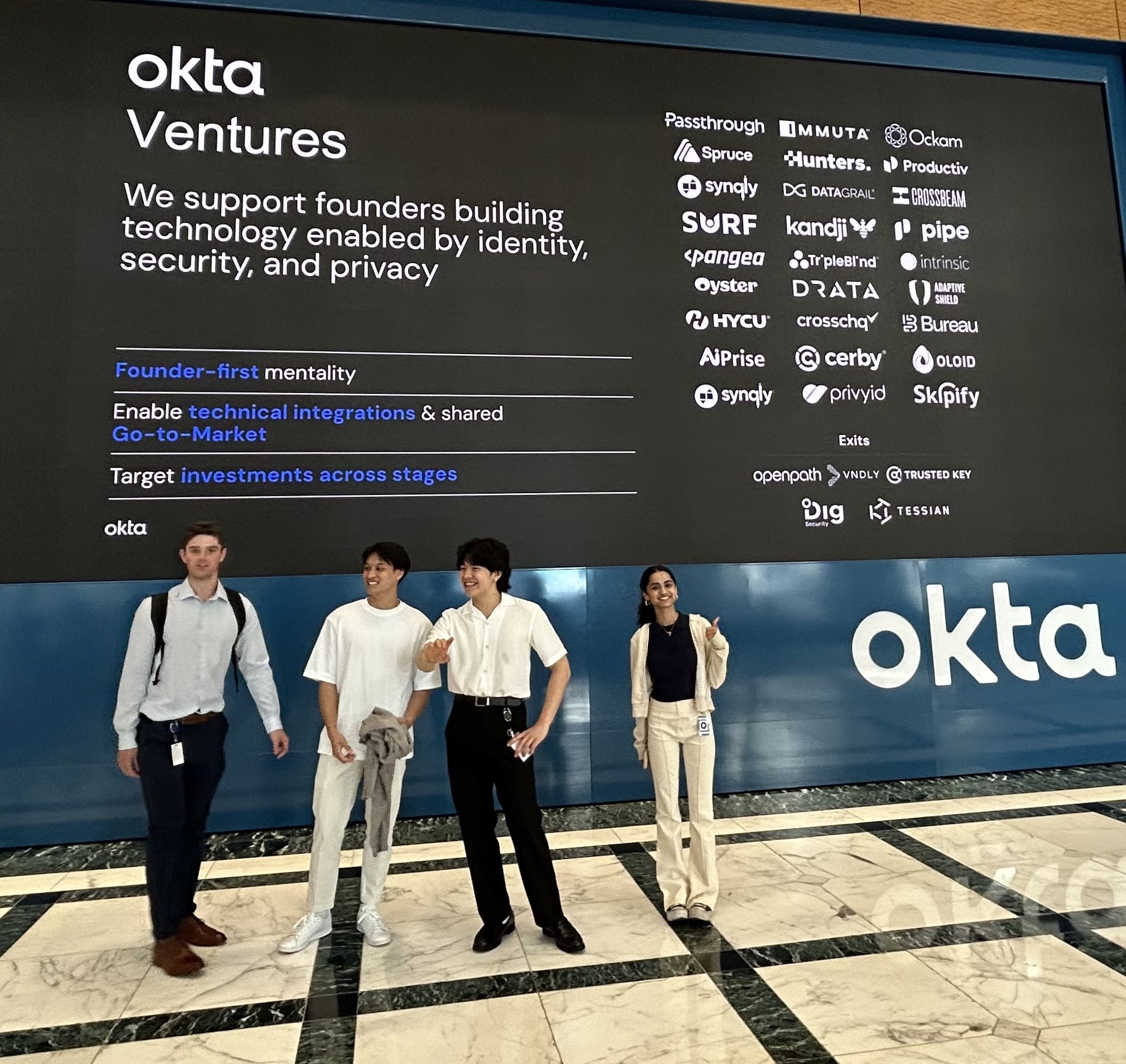
After my experience as Cisco, I knew exactly what I was looking for in a company. I am extremely grateful that I had the opportunity to get everything I wanted at Okta. Spending the majority of my summer in San Francisco at Okta HQ, I had a wonderful time meeting new people, making memories, and learning more about this amazing company.
Project 1: User Migration Playbook
Situation
- Okta is driving a major effort to give their customers the best customer experience possible. Technical Account Managers, or TAM's act as technical partners throughout a customer's lifecycle. They ensure technical alignment of a customer's business with okta and specialize indtity to guide a customer's identity strategy.
- In order to drive that effort, the TAM team has been dedicating resources to building out internal documentation for TAM's. Specific use cases on product features so that a TAM can quickly reference these materials when a customer has questions about them.
Task
- Create a playbook (use cases, best practices, general knowledge) about User Migrations. Specifically User Migrations to Okta WIC.
Action
- Become an Okta Expert on product features, customer lifecycle, and how that relates to User Migrations
- Leverage Internal Resources on use case scenarios, best practices, and information
- Iterate with Subject Matter Experts
Result
- Published a playbook on User Migrations ahead of schedule to assist with TAM enablement on WIC features
Cisco
Interning at Cisco was a game-changer.

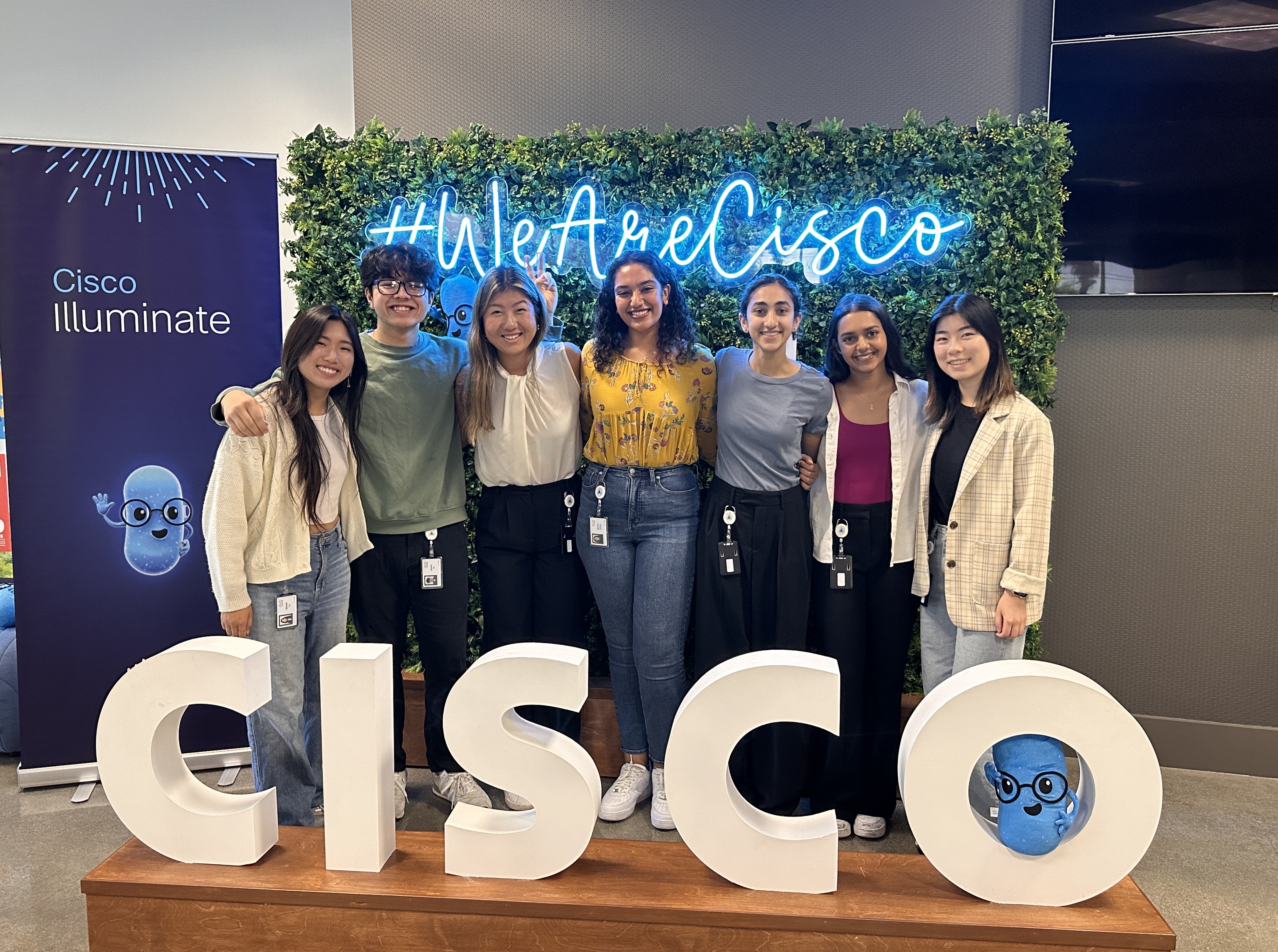
I grew so much interning at Cisco. My interpersonal, soft, technical, problem solving, and time management skills all saw a considerable growth spurt. I was surrounded by so many talented, passionate, and supportive people. Although I learned many lessons, the number one thing that I learned is to create a voice for myself and to ask for what I want. Before I get to what I was working on, I really want to highlight the great times I had with the intern cohort. Work is work obviously, but I think it's equally important to have fun and connect with others at work. It's safe to say my summer at Cisco was a summer I will never forget. I went sky-diving, became an Intern Ambassador, and most importantly, I woke up everyday looking forward to my day. The best part of any of my
Project 1: Internal Dashboard Tool for Excess and Obsolete
- 750M+ of Excess Parts
- 70%Time Saved
- 60+ Business Units Impacted
Situation
- Context: Cisco is an enterprise networking hardware and software company. Since they don't manufacture any of their own products, their supply chain has to be robust and efficient in order to fulfull customer needs.
- Because of Covid-19, an overwhelming amount of excess parts was left in inventory, with a value of $750 million towards Cisco's bottom line
- The department E&O (Excess and Obsolete) is in charge of handling the mitigation of these excess parts
- Due to the sheer volume, mitigation processes were taking longer, causing missed opportunities, and thus required solutions to help speed up their internal processes
Task
- I was put on a team with 4 other interns with varying skills: Business Analysts, Data Analyst, and a Software Engineer in order to develop a single source of truth for E&O Stakeholders
- I took the role of team leader and structured the project from an end-to-end solution. Furthermore, I contributed as an Individual Contributer, helping the software engineer produce the tool.
Action
- Collaborated cross-functionally with Product Operations, Engineering, and several Business units
- Conducted 20+ user interviews with subject matter experts and key users
- Gathered product requirements and iterateddesigns and features
- Developed automated risk analysis tool that measured the risk of each part based on past performance and history
Result
- Presented the impact of our solution to Supply Chain Executives on Cisco Live TV
- Acheieved a 70% Time Reduction on mitigation process (Timed old versus new process)
- Detailed Documentation on how to implement solution into existing website
Project 2: Increasing Accuracy of Demand Forecasting AI
- 3% Increase in Forecasting Accuracy
- 15+Streams altered
- 1 New Stream Selection Strategy based on Market Portfolio Theory
Situation
- Cisco's Supply Chain uses a Forecasting AI based on decision Trees in order to predict the amount of demand of each Product Level ID
- Due to COVID-19, the AI was producing less than desirable results due to an influx of demand
Task
- Get an understanding of how the Forecasting AI works and what could be done to improve the current accuracy rating
- Research statisical methods to infer a more accurate prediction strategy
- Put simply, the Forecasting AI had multiple streams that would branch based on feature selection
- At the end of the stream, the path that a PLID would take would be the stream chosen for the AI
Action
- Instead of taking a single stream, I researched and tested the benefits of congregating multiple streams
- Backed by a financial analysis called Market Portfolio Theory and A/B Testing, I developed a strategy to take multiple streams and take the mean of their results
- I wrote code in python that would handle this distribution and allocation and handed the analysis over to the Forecasting team for testing
Result
- A 3% increase in forecasting accuracy over the FY22-FY23 timespan
- Presented findings to key stakeholders, showing impact to demand forecasting
- A rethinking in the stream selection process and how PLID's should be accounted for
Project 3: Documenting Process Flow for Cisco Meraki
Situation
- Cisco Meraki's Supply Chain runs extremely efficiently, they have a 97% same or next day fulfillment rate due to their internal process flows.
- Cisco would like to emulate this level of success in their own Supply Chain Operations
- As the start of a long supply chain transformation, we lay the foundation by documenting Cisco Meraki's processes
Task
- Document Cisco Meraki's Supply Chain process flow across the 5 distribution centers
- Note the exact processes, from data communications and physical hand-offs
Action
- Group of 4 interns to handle their own process flow for their respectively assigned sites.
- Interview Supply Chain Managers from Cisco Meraki
- Created a barebones process flow model for the other interns to utilize
Result
- Mapped the supply chain process flows for Cisco Meraki
- Discovered Key Insights into the 97% same/next day fulfillment rate
- Laid the foundation for Cisco's supply chain transformation
Jabil
My First Internship!
Working at Jabil really opened my eyes to the field of software development and how to navigate a large company structure. I was brought on board a bit later than the rest of the intern cohort, but here is where I learned to be a self-starter and to do things on my own. This is the attitude I carried with my to Cisco and why I took on the stretch assignments that I did.
Project 1: Migration to new MES Software
- 20000+ Facility Assets
- 33%Time Saved
Situation
- For context, this Jabil location specialized in CNC manufacturing and milling
- As such, my manager was brought on board for a maintenance and facilities transformation.
- Part of this transformation was updating the MES (Manufacturing Execution System) from their legacy software to the Critical Manufacturing MES.
Task
- In order to assist with this, my task was to ensure the quality data migration of facility assets across the Livermore and Fremont Jabil Sites
- This task involved creating data maps in adherece to the CM MES (Critical Manufacturing MES) software
- Sorting through several large collections of excel files that listed facilities maintenance, I was responsible for mapping the assets according to predefined structure
Action
- There I was, on Excel, mapping the assets that ranged from lightbulbs and outlets to each room, within each subsection, and within each facility
- I tested the validity of the data uploads within the CM MES software
- For any discrepencies, I scheduled user facing interviews with shop workers to determine a data schema for how assets would be labelled
- This was because the floor workers would routinely have to upload information into the MES, so I wanted to get their input
Result
- Accomplishing my task quicker than expected, I delivered a coherent and validated data map and schema of the facility assets
- This task and subsequent subtasks assisted the Facilitys and Preventative Maintenance Manager in his efforts for the facilities transformation
Project 2: Feature Launch of Internal Software
- 3 Features
- 25%Productivity Increase
Situation
- Given that I had accomplished my main project earlier than expected, I had made friends with the software development team at Jabil.
- They were working on building an internal Project Management Software that aligned closely with the facilities transformation
- Naturally, I had asked how I could contribute to this exciting project, given that I was a project management intern
Task
- Assist in the development of three main features, including the Ticket Issuing System, Dyanmic Project Timeline, and Employee verificaiton with the Okta Sessions API
- Create Product Requirement Documents, create a product roadmap, and manage the backlog
Action
- Given my previous experience with Jira, I had a good idea of where to start
- Researching the standards and formats of Product Requirement Documents, I had to get familiar with the principles of Agile Software Development
- Using my past experiences however, it was natural completing these tasks as I already had a solid foundation
Result
- In the end, I delievered the necessary deliverables I was assigned in order to assist with the development and launch of this project
- Near the end of my internship, I was able to see the product demo of the features I had assisted with, which was completed with an increase in productivity due to my contributions